
Nuançons: the Filibuster (Pt. 2)
Yea or Nay?

The United States Senate allows for a unique form of legislative obstruction: the filibuster. Senators, in some cases, have the power to “talk a bill to death” by essentially delivering a speech so long that no vote on the bill can take place. This practice has shaken American politics in the country’s most critical legislative debates, such as civil rights, Obamacare, and mass shootings legislation. Over the years, the filibuster has become almost a cultural symbol of American politics, although many question its relevance in today’s political landscape.
Is the filibuster an obscure bureaucratic maneuver allowing self-obsessed politicians to hinder the democratic process, or a powerful expression of free speech that gives a voice to the minority, acting as an emblematic symbol of our senators’ devotion to their principles?
Some might say a little bit of both. I would tend to agree. Regardless of one’s stance on the subject, one must admit that both sides make a compelling argument for their case. Let’s explore these ideas.
This article is split into two parts. Part 1 covered the main features of the filibuster, such as its historical footprint. We even explored other forms of obstructionism. This second part will cover the ongoing debate on its relevance in today’s society, presenting both side’s cases.
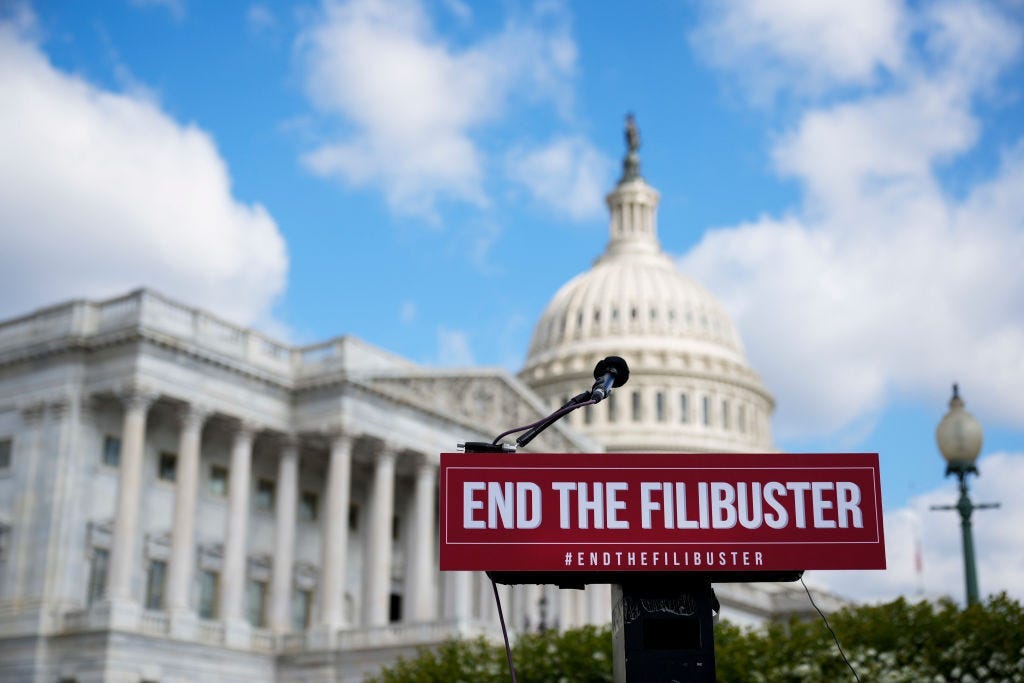
Arguments in Favor of the Filibuster
Filibusters are justified through various arguments. These range from asserting their contribution to the fundamental nature of the Senate, to more philosophical considerations, such as the necessity of providing a voice for legislative minorities. We will now explore these arguments and others in greater detail. Let’s begin.
A Timely Change in Opinions
Before covering the main arguments in favor of the filibuster, it must be noted that there is some degree of hypocrisy among Senators. It is not uncommon for Senators to oppose parliamentary obstruction when their party holds the majority, and to shift their position when it becomes politically advantageous. For instance, in 2021, after the change in majority in the Senate, 45 Senators voiced their criticism against the filibuster. However, 39 out of those 45 Senators had defended the filibuster and its use prior to regaining control of the Senate.
No one likes the Electoral College, except perhaps those who were elected because of it. No one likes gerrymandering, except those doing the gerrymandering. No one likes the filibuster, except those doing the filibustering. — Kevin Bleyer
Admittedly, Senators use every lever at their disposal to defend their bills. Their opinion sometimes appears to be merely a circumstantial variable within the broader scope of their mandate. Even so, when discussing the pertinence of the filibuster, one must focus on the rational justifications from each side of the argument, rather than the underlying political reasons that might incline Senators toward one direction or another.
The Nature of the Senate
Discussing the filibuster allows us to reflect on the very nature of the Senate. After all, why have two Chambers in Congress? What is the difference between the House and the Senate. We will not elaborate further than we need to, and instead focus on why the filibuster makes the Senate different.
The purpose of the Senate is to balance the House. Its slower deliberations are one of the ways it has to extend debates. Besides, it is aimed at preventing the House from dominating the legislative agenda. A hypothetical unified majority held by a single party would fast forward bills and Congress would turn into a factory, automatically passing bills. The Senate, with the filibuster and the need for a super majority, slows that process and gives value to political discussion.
Moreover, the Senate is an extension of the states (each state has two senators, regardless of its population). When filibustering, Senators often read letters sent by their constituents. Taking the time to have such conversation and include people’s voices (although it is not restricted to the Senate), is a core element of democracy, streamlined by the filibuster.
Raising Awareness
The filibuster has become a cultural element of American politics. Many controversial issues discussed in Congress are met with a filibuster. In some instances, it highlights Senators’ abnegation and determination to fight for what they believe in, regardless of what that might be.
There’s far more pain involved in rolling over, far more pain in hiding in the shadows, far more pain in not standing for principle, not standing for the good, not standing for integrity — Sen. Ted Cruz during his 2013 Obamacare filibuster.
The filibuster is regularly used to raise awareness on issues that failed to catch the general public’s attention. It is also a way to put an issue on the political agenda.
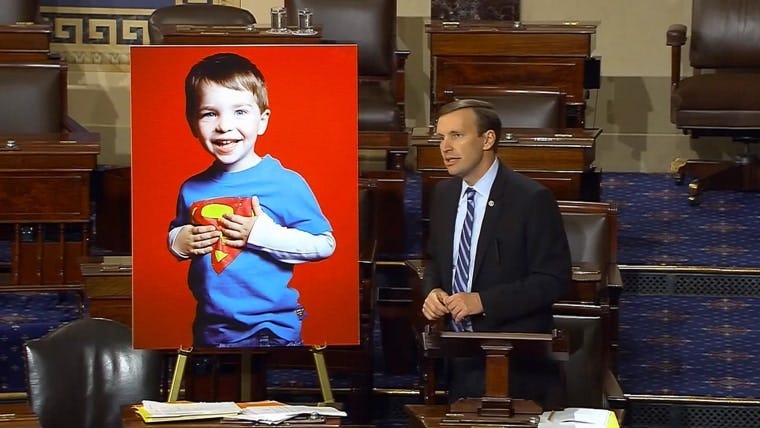
Senators employ the filibuster as a pause in Congress’ fast-paced proceedings. It provides the Senate with an opportunity to deliberate on a given issue. For instance, in 2016, Senator Chris Murphy performed a nearly 15-hour filibuster on Gun control, in an attempt to pressure the Senate to expand background check rules (among other things). He delivered his speech during a debate over an unrelated spending bill, but managed to secure a commitment from Senate leadership to hold a vote on two Democratic proposals related to gun control. Both proposals were rejected, but the filibuster successfully shed light on the necessity (in Sen. Murphy’s view) for further gun control regulations. In addition, filibusters are used to bring clarity on senators’ stances. By forcing a vote, Sen. Murphy confronted senators with their responsibilities, compelling them to publicly signal their opinions on gun control. While it can be difficult to hold politicians accountable for inaction, Sen. Murphy’s filibuster successfully provided his side the chance to confront opponents based on their votes.
A Safeguard Against Political Extremism
Any attempt of filibuster can be abruptly stopped by a motion of cloture. If three-fifths of the senate (60 senators) vote in favor of the motion, a vote on the bill in session takes place. The existence of the rule forces compromise, as the only way to end a filibuster is to negotiate and vote in favor of cloture. If negotiations fail, the Senate majority must compromise with the minority performing the filibuster. Similarly the mere threats of filibusters are at times enough to compel the majority to compromise and open discussions.
If a majority party knows they need to garner 60 votes to end debate on a bill, the necessity of working across the aisle, negotiating, and finding areas of agreement becomes imperative, rather than optional. Without the filibuster as a tool of negotiation, the Senate becomes little more than a smaller version of the House of Representatives where legislation reflects the priorities of the majority, with little regard to concerns of the minority. — Rachel Bovard
We have now explored the core arguments supporting the filibuster, let’s now turn to the other side and understand the case against its legitimacy in today’s society.
Arguments Against the Filibuster
Calculated Theatrics
While some see the filibuster as an expression of senators’ uncompromising dedication for an issue, others see it as calculated theatrics. One could argue that the filibuster is the symbol of the political elite trapped in petty political infighting, disconnected from the issues faced by the American people. It can be regarded as the epitome of bureaucracy, where political gain takes hostage efficient deliberation in Congress.
Blocked nominations offer a compelling example of the filibuster being hijacked for partisan squabbles. This prompted Democrats to set a precedent, invoking the nuclear option in 2013, lowering the threshold to overcome a filibuster on nominations from 60 votes to a simple majority. A few years later, in 2017, this precedent backfired when Republicans extended it to include Supreme Court nominations.
Many a Senator has used filibusters to gain widespread attention and further their career. Although Senator Chris Murphy’s and Senator Ted Cruz’s intentions were probably genuine, it is undeniable that their publicity significantly benefited their career. Following his speech, Chris Murphy, then a young Senator, received 10,000 calls. It could be said that his filibuster made him one of the faces of gun laws advocates in the Senate. As for Ted Cruz, his 2013 filibuster against Obamacare was heavily criticized by Democrats, solidifying his political branding as a strong Republican leader, and at the time, a likely presidential candidate. Besides, I have purposely omitted the fact that, like Cory Booker in 2025, Ted Cruz did not technically perform a filibuster, as per Senate rules, he had to cede the floor when the previously scheduled afternoon vote came up. Yet, this technicality changed very little: his speech caught the attention of his fellow Republicans, the opposition, the press and the general public. His political gain was similar to a legitimate attempt to obstruct the vote.
Dictatorship of the Minority
The filibuster gives excessive power to the minority party. The composition of the Senate is a result of the American electorate’s vote. The minority party can work towards achieving bipartisan laws and compromise. The opportunity to lead must be earned in the polls. Allowing a minority to go against the arguably indirect will of the American people can be considered a disgrace to democracy. Peter Fenn, GOP consultant and former Senate aide, called filibusters the “tyranny of the minority.”.
A revealing calculation was made to express the extent to which filibusters allow a minority to hold the senate hostage:
Because ending a filibuster requires a 60-senator majority vote, just 41 conservative senators (the number of senators needed to protect a filibuster) in the 117th Senate who represent just over 20% of the American population can kill any and all legislation brought by the party voted in to control the Senate, House, and White House. — The Editors of ProCon
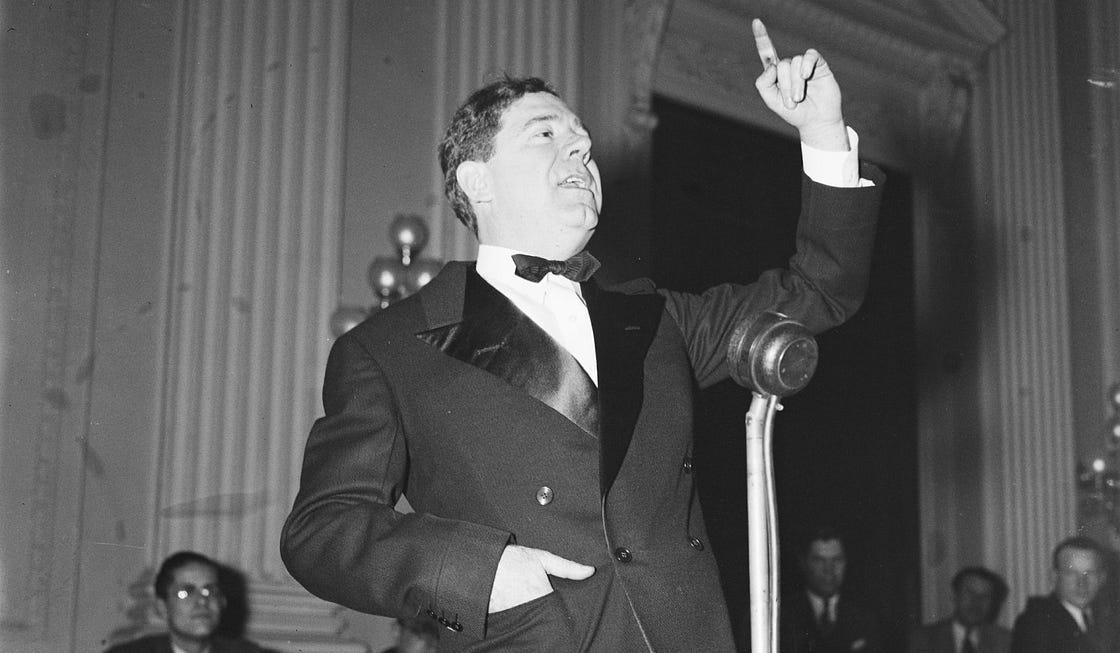
Beyond that, it is worth noting that the filibuster is a workaround rather than a clearly defined institutional design. There must be better ways to give the minority a voice, other than making its senators talk for an excessive amount of time. Filibuster speeches have diminishing marginal utility. Few people in this world can talk for 10+ hours and be as insightful as a 25-minute segment from start to finish. In 1935, in his 15-hour long filibuster, Huey Long — a quite fascinating character — shared recipes for fried oysters and potlikker. Ted Cruz, on the other hand, read Green Eggs and Ham during his 2013 filibuster.
Congress gets negative value from the filibuster. It slows legislative proceedings, and makes the Senate inefficient. If one wishes to give more power to the political minority, a simple alternative would be to raise the threshold needed to pass a bill, such that it aligns with the cloture motion threshold, thereby rendering the filibuster ineffective. Many objections immediately come to mind, many reasons that in all likelihood, apply to the filibuster as well.
An Obstacle to Progress, Rooted in Racism
Historically, the filibuster primarily served as a way to slow down progressive legislation from being passed. There is an asymmetry in the value parties derive from the filibuster. For decades, southern Democrats have used it to hinder efforts to protect Black Americans’ rights as American citizens. President Obama went as far as to call the filibuster a Jim Crow relic.
Between 1917 and 1995, the Senate killed 30 bills with majority support in both chambers and the White House. Shamefully, half of these were significant civil rights measures addressing poll taxes, employment and housing discrimination, and lynching. You read it right, it took the Senate 240 attempts and 122 years to finally pass an anti-lynching bill in 2022.
We can choose to protect a tool of Jim Crow and segregation that is found nowhere in the Constitution. Or we can choose to defend the sacred right to vote. — Elizabeth Warren
Naturally, this argument does not rely solely on the filibuster’s historical use to slow down crucial bills. The core issue is that the very design of the filibuster tends to allow such situations.
What It Would Take to Abolish the Filibuster
There are two ways the Senate could abolish the filibuster.
The first option would be to change the cloture rule and lowering its threshold to, for instance, allow a simple majority to end debate on a legislation. This solution would be a challenging endeavor, as two-thirds of Senators are required to change the rules of the Senate.
The second option would be to replicate what was done by the House of Representatives and use the “nuclear option” which essentially consists in creating a precedent in the Senate. This approach was used to end the filibuster around certain nominations, as mentioned earlier.
Overall, the interests of both parties fluctuate depending on the composition of the Senate. Although Democrats have recently voiced more criticism towards it, it is unlikely that they will push for the abolition of the filibuster, having just lost the Senate. On the other hand, it is doubtful that the Republicans would consider addressing the issue anytime soon. In addition, with the rampant polarization of the Senate and what it looks like the seemingly never-ending decline of bipartisan cooperation, we might be years, or even decades away from seeing the abolition of this fascinating Senate proceeding.
Conclusion
Parliamentary rules are numerous and politicians continuously find ways to leverage them for political gain. Parliamentary obstruction is ubiquitous, no matter how restrictive the rules are. The US Senate filibusters are merely a symbol of it and seem to relate to the very nature of politics. Does that mean rules must continuously evolve to ensure smooth legislative proceedings, or is the filibuster a singular expression of American democracy, giving the minority party a fighting chance to have the voice of its constituents heard in the upper chamber?
I hope to have successfully communicated the intricacies of the filibuster and highlighted the complexity of forming an opinion on its relevance in the legislative process of the United States. It certainly is a fascinating element of American politics, and many of us are eager to see how it will impact the country in the near future.
References
Ballotpedia. (2021). Arguments for and against the filibuster, 2021. Retrieved from https://ballotpedia.org/Arguments_for_and_against_the_filibuster,_2021
Britannica. (n.d.). Filibuster debate: ProCon.org. Retrieved from https://www.britannica.com/procon/filibuster-debate
BrainyQuote. (n.d.). Filibuster quotes. Retrieved from https://www.brainyquote.com/topics/filibuster-quotes
AzQuotes. (n.d.). Kevin Bleyer quote. Retrieved from https://www.azquotes.com/quote/21061?ref=filibuster
Kaine, T. (n.d.-a). The 7 most powerful quotes from Senator Chris Murphy’s gun control filibuster. Retrieved from https://www.kaine.senate.gov/in-the-news/the-7-most-powerful-quotes-from-senator-chris-murphys-gun-control-filibuster
Kaine, T. (n.d.-b). The 7 most powerful quotes from Senator Chris Murphy’s gun control filibuster. Retrieved from https://www.kaine.senate.gov/in-the-news/the-7-most-powerful-quotes-from-senator-chris-murphys-gun-control-filibuster (Note: This is a duplicate entry of the previous one)
Shear, M. D., & Tankersley, J. (2021, July 14). How every Senate Democrat voted on ending the filibuster for voting rights. The Washington Post. Retrieved from https://www.washingtonpost.com/politics/interactive/2021/filibuster-vote-count/
U.S. Senate. (n.d.). Party division. Retrieved from https://www.senate.gov/history/partydiv.htm
USA.gov. (n.d.). U.S. Senate. Retrieved from https://www.usa.gov/agencies/u-s-senate
Murphy, C. (n.d.). Murphy captures nation’s attention with filibuster. Retrieved from https://www.murphy.senate.gov/newsroom/in-the-news/murphy-captures-nations-attention-with-filibuster
Wikipedia. (n.d.-a). Chris Murphy gun control filibuster. Retrieved from https://en.wikipedia.org/wiki/Chris_Murphy_gun_control_filibuster
Blake, A. (2013, September 25). Ted Cruz’s Obamacare all-nighter ends after 21 hours. ABC News. Retrieved from https://abcnews.go.com/Politics/ted-cruzs-obamacare-nighter-ends-21-hours/story?id=20365712
Wikipedia. (n.d.-b). Nuclear option. Retrieved from https://en.wikipedia.org/wiki/Nuclear_option
Jackson, D. (2020, October 1). Fact check: GOP ended Senate filibuster for Supreme Court nominees. USA Today. Retrieved from https://eu.usatoday.com/story/news/factcheck/2020/10/01/fact-check-gop-ended-senate-filibuster-supreme-court-nominees/3573369001/
Pilkington, E. (2013, September 25). Ted Cruz reads Green Eggs and Ham during Senate Obamacare filibuster — as it happened. The Guardian. Retrieved from https://www.theguardian.com/world/2013/sep/25/ted-cruz-fillibuster-speech-obamacare
Wikipedia. (n.d.-c). Wendy Davis (politician). Retrieved from https://en.wikipedia.org/wiki/Wendy_Davis_(politician)
Grunwald, M. (2009, October 21). The ghost of Huey Long. Time. Retrieved from https://content.time.com/time/politics/article/0,8599,1933802,00.html
U.S. Senate. (n.d.-a). Party division. Retrieved July 12, 2022, from https://www.senate.gov/history/partydiv.htm (Note: Duplicate of a previous entry with access date)
Certo, P. (2021, March 8). We may be one election from permanent minority rule. In These Times. Retrieved from https://www.google.com/search?q=https://inthesetimes.com/article/democracy-senate-filibuster-minority-rule-election-reform
Millhiser, I. (2021, January 26). America’s anti-democratic Senate, in one number. Vox. Retrieved from https://www.google.com/search?q=https://www.vox.com/policy-and-politics/2021/1/26/22249899/senate-filibuster-population-democrats-republicans
U.S. Senate. (n.d.-b). Huey Long filibusters. Retrieved from https://www.senate.gov/about/powers-procedures/filibusters-cloture/huey-long-filibusters.htm
Binder, S. A. (2021, April 27). What is the Senate filibuster and what would it take to eliminate it? Brookings. Retrieved from https://www.brookings.edu/articles/what-is-the-senate-filibuster-and-what-would-it-take-to-eliminate-it/
Reading this for my politics a level